
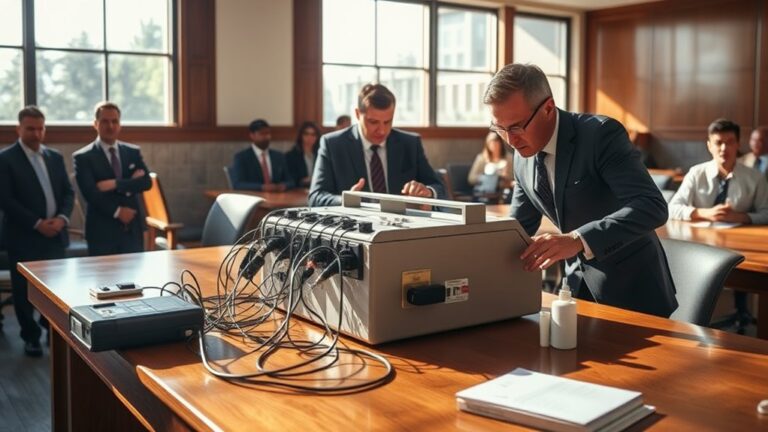
If you are navigating a legal dispute where your credibility is the deciding factor, the pressure can be overwhelming. Whether you are facing a criminal allegation, a complex civil suit, or a sensitive family law matter, the need to verify the truth is not just personal, it is a strategic necessity. In Northern California, private truth verification serves as a powerful tool for discovery and defense, providing the clarity needed to move a case forward when traditional evidence is lacking.
California Lie Detection provides forensic-grade truth verification services tailored for legal professionals and their clients throughout Northern California. Our services are designed to support attorney work-product and case strategy.
Legal Professional Note: Private testing is an essential component of modern case strategy. If results are favorable, they can be used to negotiate dismissals or settlements; if not, they remain protected under attorney-client privilege. For deep legal analysis on case law and admissibility, please refer to our Rooney Legal Strategy Hub.
Protect Your Case with Verifiable Truth
Strategic decisions require certainty. Contact our Chico office today to schedule a confidential legal examination.
Call (530) 345-5678 To Book a Free Online Consultation Now
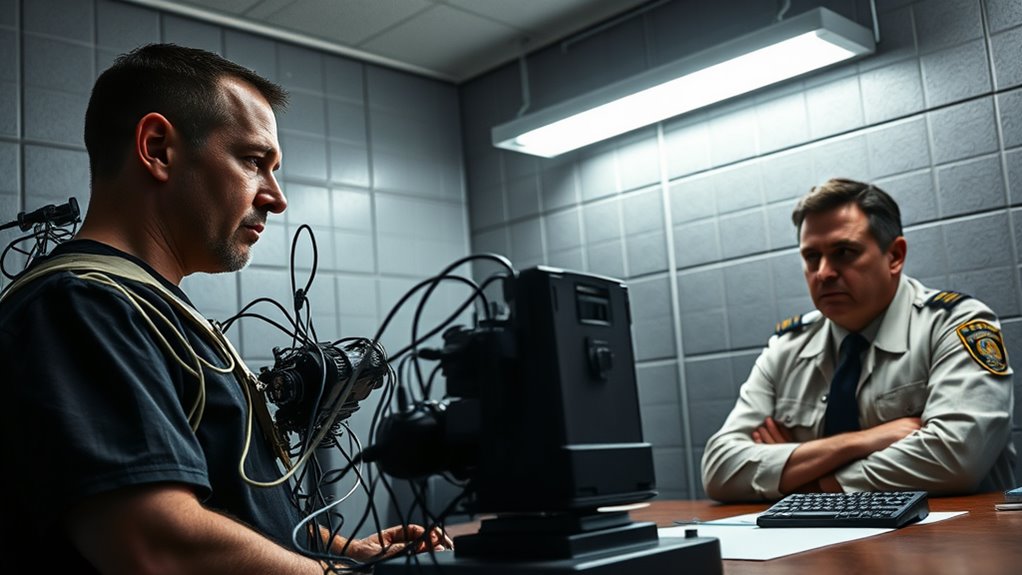
Legal professionals across Chico, Vallejo, and Redding utilize private lie detection not as a courtroom silver bullet, but as a critical investigative asset. By conducting a private exam before official testimony, an attorney can move from speculation to a data-driven defense.
Because these tests are commissioned privately by legal counsel, the results favorable or otherwise are typically protected under the attorney-client privilege and the work-product doctrine. This allows a defense team to test the veracity of a client’s statement or a witness’s claims without the risk of a “failed” result being automatically discoverable by the prosecution.
As with all forensic technologies, these tools are validated for private use and are considered forensically reliable for private truth verification. However, per California Evidence Code 351.1, no method guarantees 100% accuracy, and results are generally inadmissible in criminal trials without a prior written stipulation from all parties.
When selecting a truth verification method for legal discovery in Chico, Vallejo, or Redding, it is essential to understand the technical distinction between our two primary forensic tools. Both methods are forensically reliable for private truth verification, yet they analyze different indicators of deceptive stress.
The polygraph remains the most recognized instrument in the legal community. It functions by recording multiple physiological markers simultaneously:
In a legal context, the polygraph is often preferred for formal defense presentations and is the tool most frequently cited in California Evidence Code 351.1 stipulations.
The Computer Voice Stress Analyzer (CVSA) offers a non-intrusive alternative. Rather than measuring body systems, it utilizes proprietary software to identify microtremors, low-frequency vibrations in the human voice that disappear when a speaker is under the stress of deception.
While both systems are validated for private use, clients must understand the legal guardrails. As with all non-polygraph/CVSA technologies, California Evidence Code 351.1 applies. No method guarantees 100% accuracy. These tools are intended to provide an “additional layer of forensic analysis” to assist counsel in making informed strategic decisions.
When considering lie detection for legal strategy in Chico, Vallejo, or Redding, it is vital to understand the “courtroom barrier.” While these tools are indispensable for private discovery, their use in a formal trial is strictly governed by state law.
Under California Evidence Code 351.1, the results of a polygraph examination, the opinion of the examiner, or even the fact that a person offered to take or refused to take such a test, are generally inadmissible in any criminal proceeding. This includes trials, hearings, and grand jury proceedings, unless all parties (the prosecution and the defense) formally stipulate to their admission before the test is conducted.
If the results aren’t an “automatic win” in court, why do top Northern California attorneys still utilize them? The value lies in Pre-Trial Leverage:
We provide these services as an additional layer of forensic analysis to assist in investigative decision-making. As with all non-polygraph technologies, California Evidence Code 351.1 applies. No method guarantees 100% accuracy. Our role is to provide forensically reliable data for private truth verification, giving you and your counsel the information needed to navigate the NorCal legal system with confidence.
Success in a forensic examination, whether for a criminal defense strategy in Chico or a civil dispute in Vallejo, depends heavily on proper preparation. Because these tests measure physiological or psychological stress, the environment and the subject’s state of mind are critical factors.
We recommend that all legal truth verification exams be coordinated directly through your attorney. This ensures that the examination falls under attorney-client privilege and that the questions asked are strategically aligned with your case goals. Our examiners work closely with NorCal legal teams to draft precise, “Yes or No” questions that address the heart of the legal matter.
To ensure the most reliable results, the subject should follow these requirements:
When arriving at our Redding, Chico, or Vallejo facilities, please bring:
If you are ready to integrate forensic truth verification into your legal strategy, the first step is a confidential consultation. We will discuss the specific needs of your case, determine if a Polygraph or a CVSA is the appropriate tool, and schedule a session at the primary NorCal hub most convenient for you.
Secure Your Legal Strategy Today
Precision matters when the stakes are high. Contact California Lie Detection to schedule your professional forensic examination in Chico, Redding, or Vallejo.
Email (schedule@californialiedetector.com ) To Contact Our Legal Team Or Call (530) 345-5678 To Schedule An Appointment
Under California Evidence Code 351.1, polygraph results and the fact that a test was taken are generally inadmissible in criminal proceedings unless both the prosecution and defense stipulate to their entry. In civil cases, admissibility is also restricted but can sometimes be negotiated during mediation or settlement conferences as a condition of the legal agreement.
Attorneys use private tests as a “pre-litigation” or discovery tool. A passing result gives your lawyer significant leverage to negotiate with prosecutors for a dismissal or with opposing counsel for a settlement. Because it is a private exam, if you do not pass, the results remain confidential and protected under attorney-client privilege.
A polygraph measures physiological data (heart rate, sweat, breathing), while the Computer Voice Stress Analyzer (CVSA) is a voice-based risk assessment tool that identifies microtremors in speech. CVSA is often preferred for remote witness vetting in Redding or Vallejo, while polygraph is the gold standard for in-person forensic testing in Chico.
Yes. Unlike the polygraph, which requires physical sensors, the CVSA can analyze high-quality audio. This allows us to provide truth verification for clients in Redding, Yuba City, and Vallejo without requiring immediate travel, provided the legal context and audio quality allow for a professional remote interview.
Our fee for a professional, attorney-backed polygraph in Chico starts at $500 and may differ according to the requirements. For remote CVSA witness vetting or discovery, the fee starts at $400. These rates include the pre-test interview, the examination session, and a formal forensic report provided to your legal counsel.